Viola
She was dead and turned to ash. But her objects were right where they had been that morning. For a woman so private and vain and honest, where was her underbelly? The thing she would cover with sweaters, vests and lipstick. The thing she would drink as she had her evening cup of tea?
On a walk once, I wrote in my head while looking at my shadow, “There is the image of my well-kept secret. That my insides are different then my out.” I have looked through my portraits and rarely found the fugitive fleeting. But some kind of remnant not placed in the image by me. Something raised and dead and regrown through frost and mulch. Tended and watered. But nonetheless, blue. Like with a pregnant rock. A still birth.
Before my grandma died, I had been painting a portrait of my mother sleeping. It's a large square canvas that is filled with her frown lines, tossed hair and flushed cheeks. After my grandma died, the images of her being alive yet asleep in some way started to weave themselves into my mother's portrait.
There's something to be said for the connection. The one where on the edge of death, I saw my grandmother's body, without her inside it. She disappeared and I pictured her in her garden. The one that I don’t push and pry open because I already know what sits inside. Irises, Delphiniums, and forget-me-nots. Outside of her garden, my grandfather grew white roses for her, that lived through frost snaps and belligerent New Mexican heat.
My grandma wrote to me often. During grad school, she read almost the entirety of my thesis reading list and would misgender male authors into women, an act I always loved about her. In one of her last letters to me, she wrote:
“Again, I firmly believe that the language we speak and write in, along with personality, boundaries and all the other intersections, create a reality which acts upon us and which in turn we act upon. This theory has been controversial forever but it makes very good sense to me. Right now, I'm trying to learn the language rules of an aging woman, which feels somewhat like foreign territory to me. Speak less, old ideas; don't talk about old times; listen instead; learn the new vocabulary and slang--on and on. Meanwhile, Harold and I are both excited and anxious about our move and new stage of life. But then I think you, your mom and I are all in the same boat right now.”
I knew she didn’t mean the boat that moved tides. The one tethered to her dock at her death. But did she somehow mean the garden? The one where stages of life lead to debilitating rages turned into depressive episodes that carve away at the loves of lives? That thin men into things that can’t be trusted and spoken to?
This is the thing about solitude. This is where I have wanted to get. Solitude is rarely for me, an act of joy or peace or interest. It has often been some kind of rebellion where I have to be alone to be honest. And part of that honesty is a perverted, curious and exhausted self. Childlike and full of adult desire. May Sarton once wrote in her Journal of Solitude, “I am here alone for the first time in weeks, to take up my real life again at last.” To which I wished to do the same. But what is my real life? What does it mean to grow the blue? And for who?
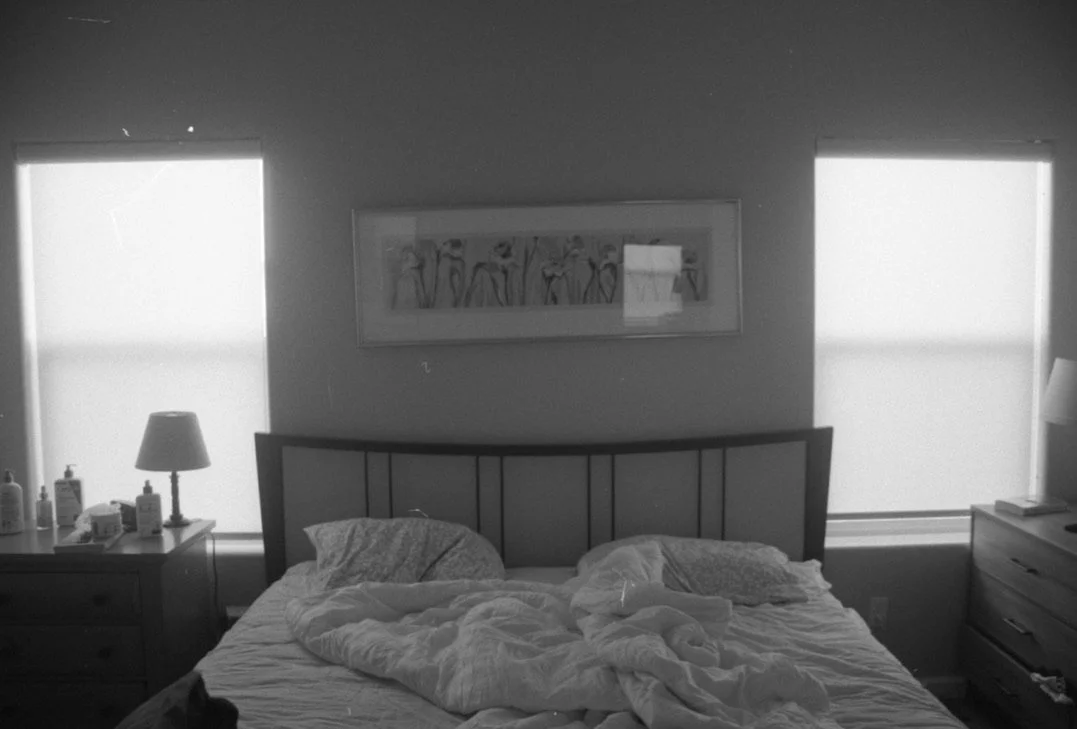
A bedroom with a messy bed, bedside tables with lamps, bottles, and other items, and two windows with blinds, in black and white.
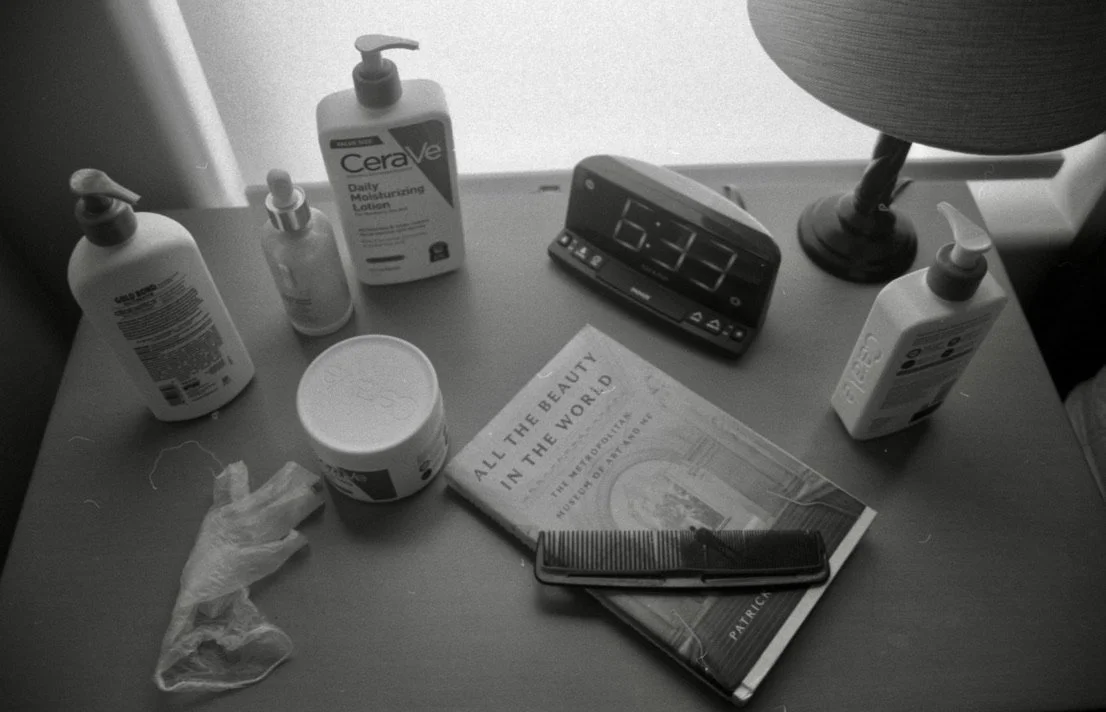
A bedside table with personal care items, a clock showing 6:33, a magazine titled 'All the Beauty in the World,' and a comb with scissors.
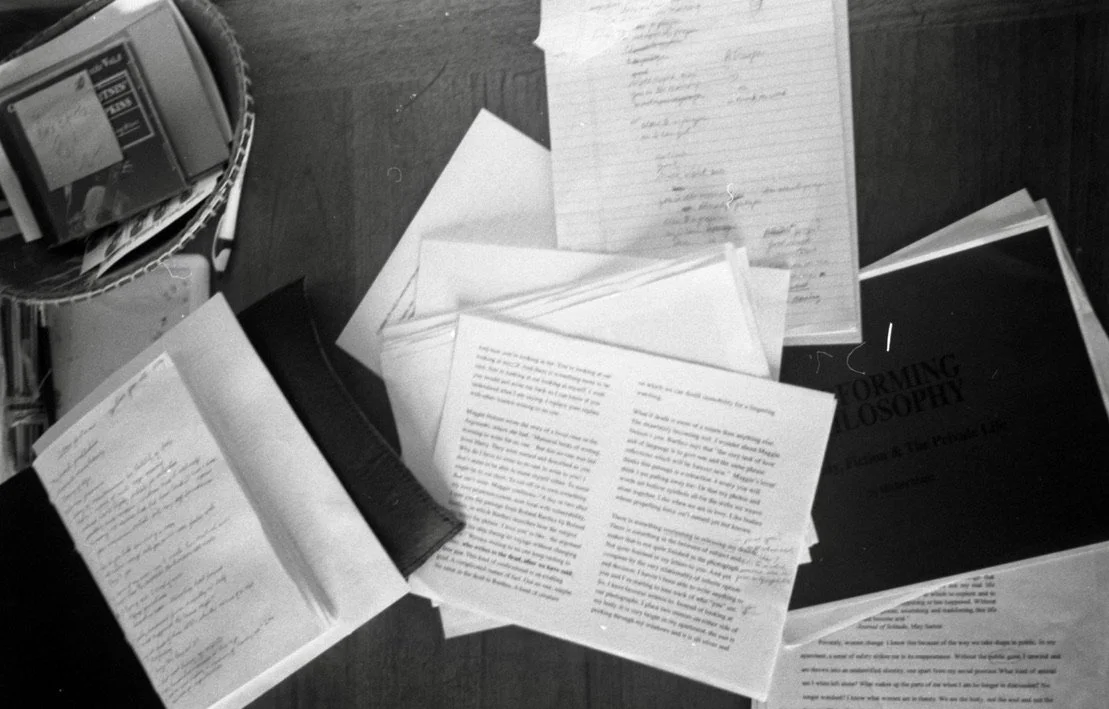
Various documents, papers, and books spread out on a desk, including a notebook, printed pages, and a book titled 'Forming Philosophy'.
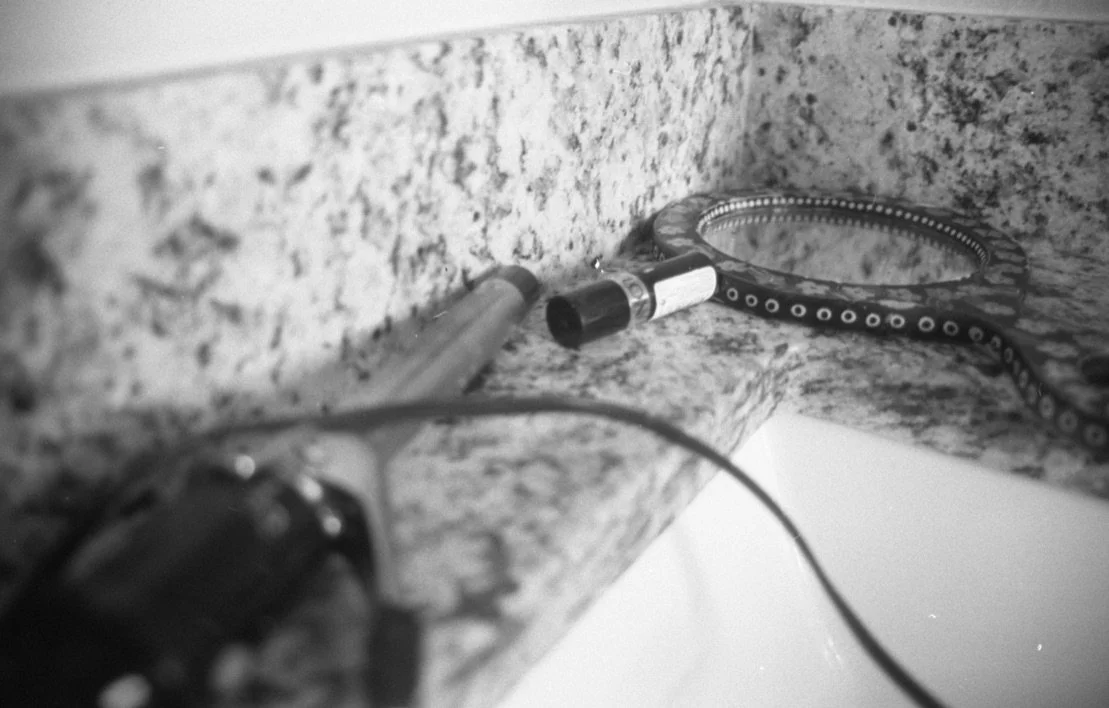
A close-up black and white photo of a snake curled on a granite countertop, with electrical cords and a flashlight nearby.
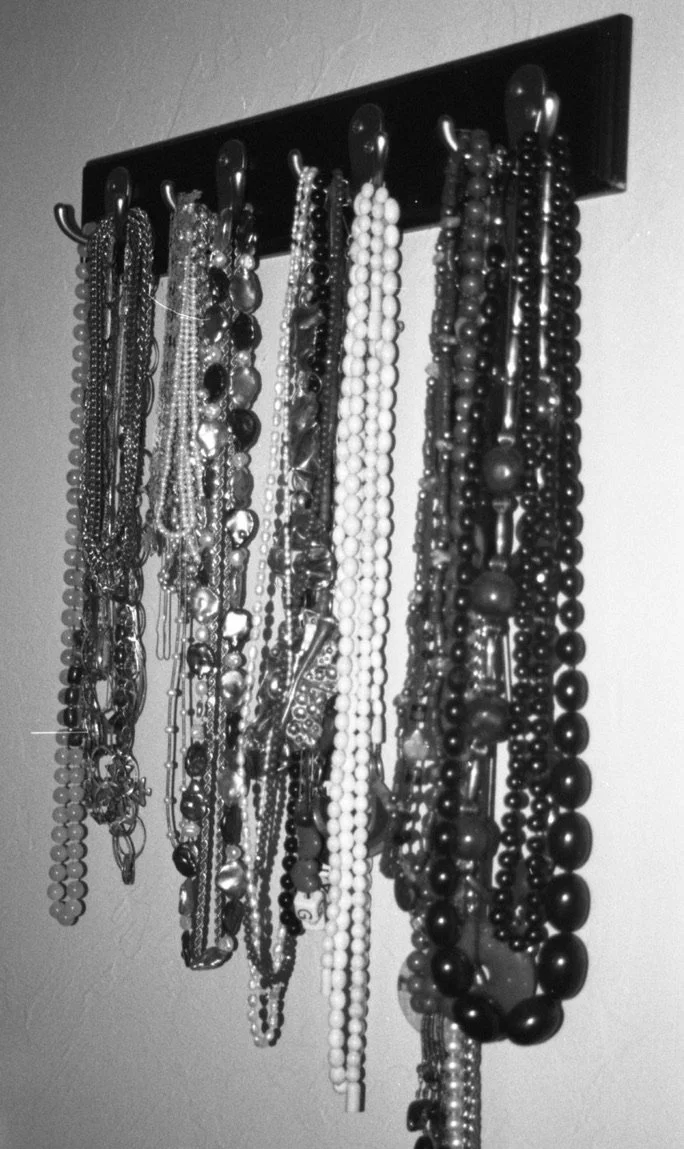
Jewelry necklaces hanging on hooks on a wall-mounted jewelry organizer in black and white.
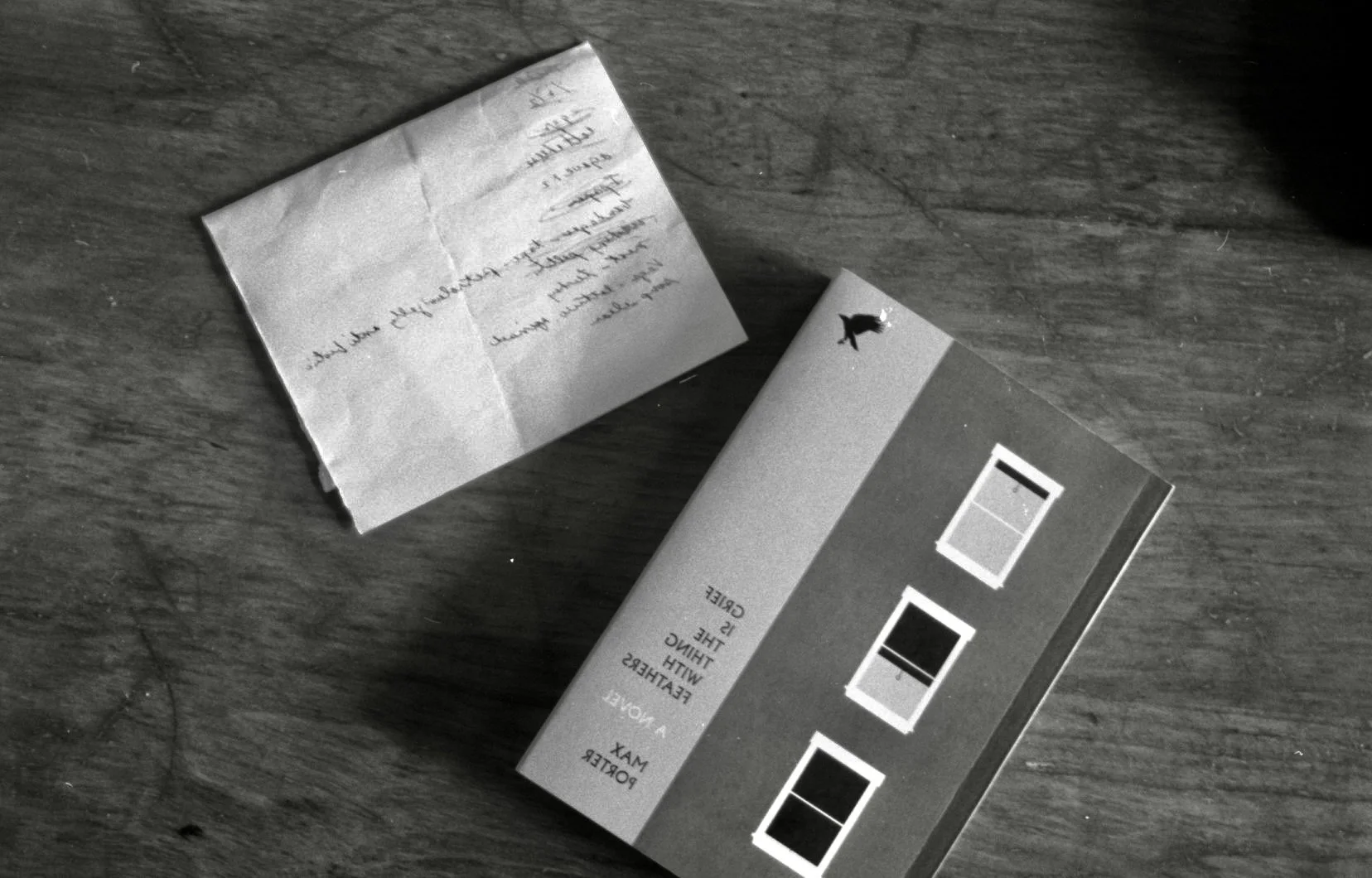
A notebook and a small note with handwritten text on a wooden surface.
A cluttered kitchen countertop with various empty picture frames, a bag of shredded material, and a cloth.
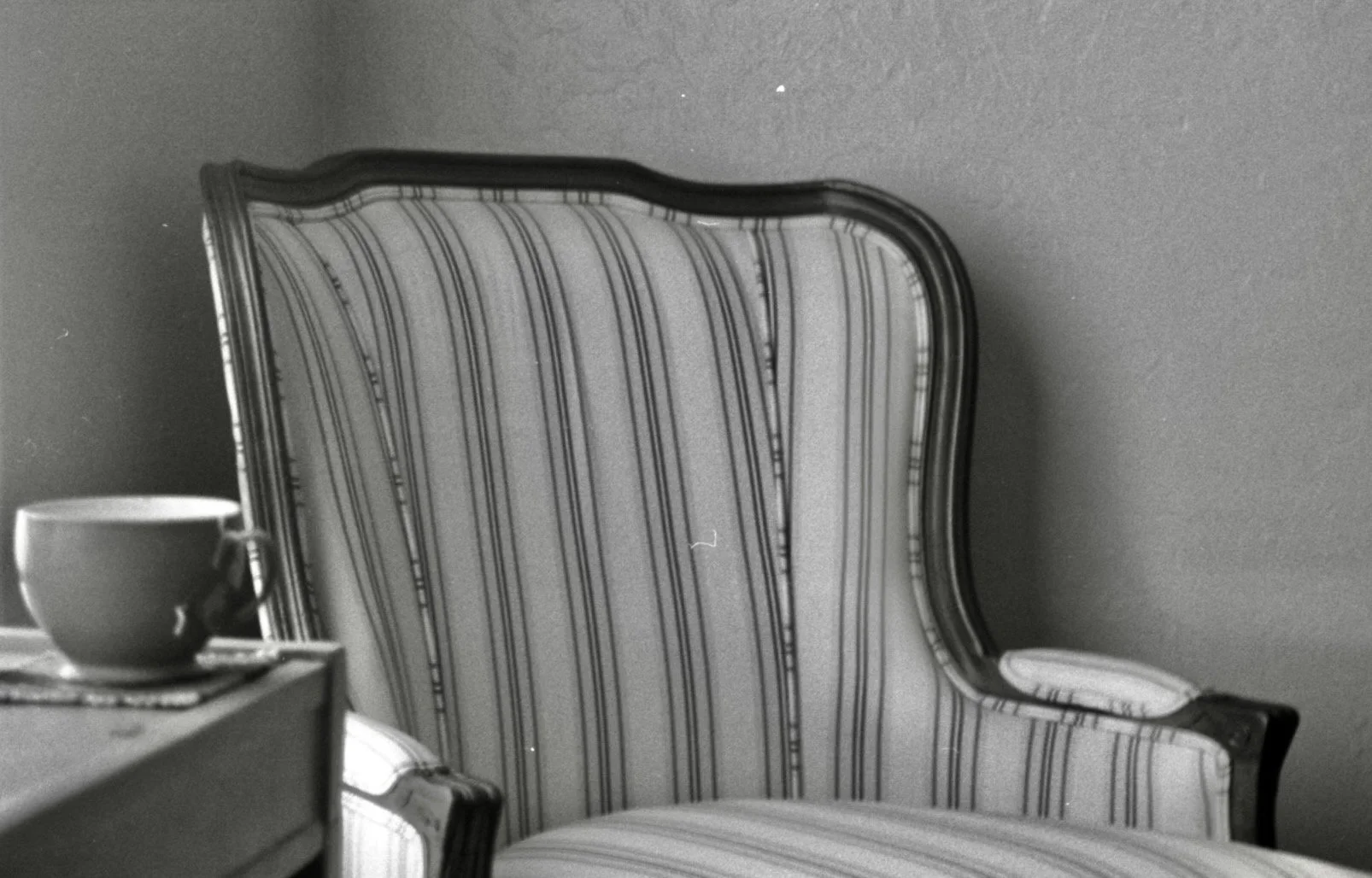
An empty vintage armchair with striped upholstery, placed against a plain wall, with part of a table and a cup visible in the foreground.
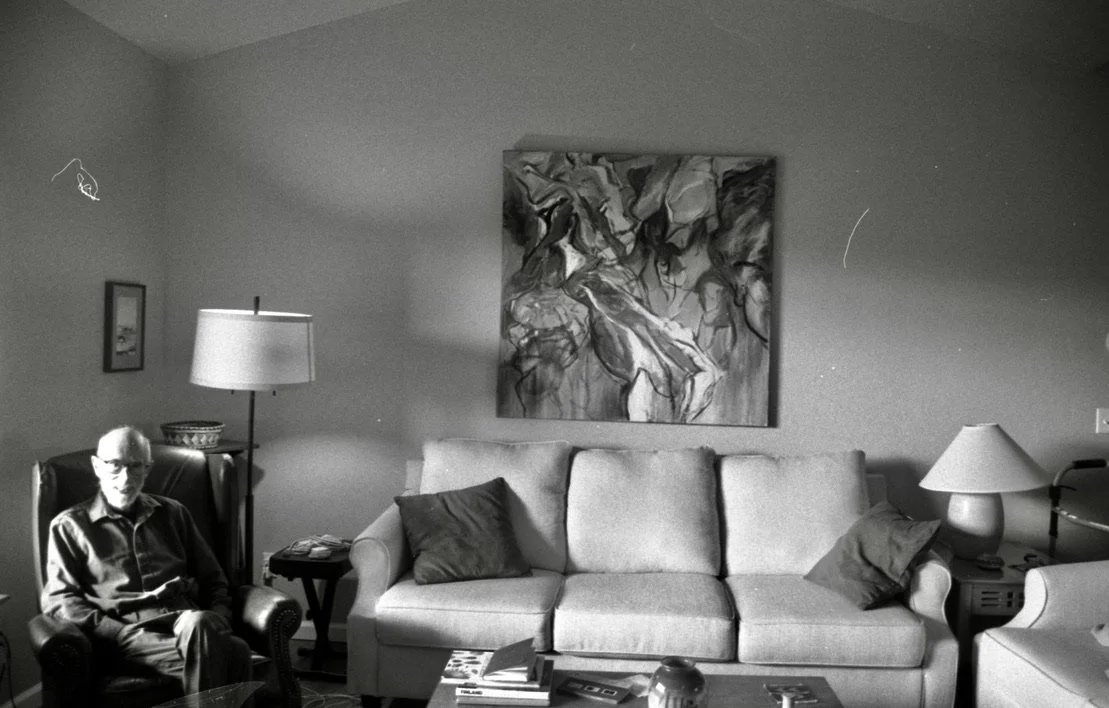
Living room with a man sitting in an armchair, a sofa with cushions, a painting on the wall, side tables with lamps, and a coffee table with books.
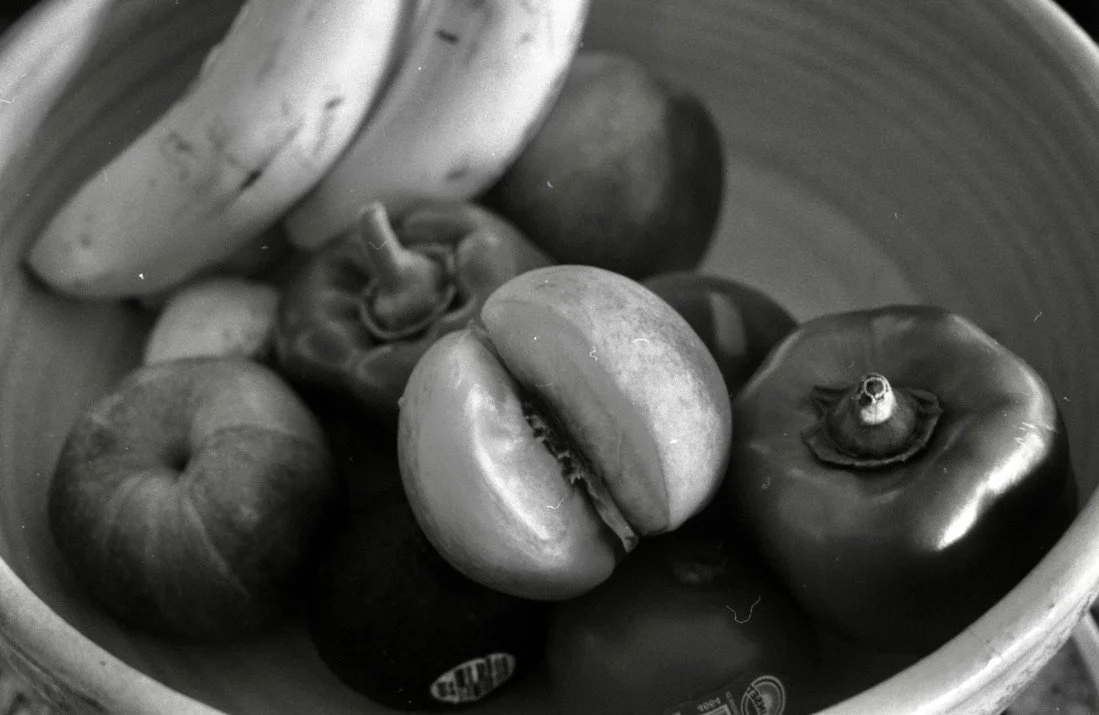
Black and white photo of assorted fresh fruits, including tomatoes and peppers, inside a bowl.
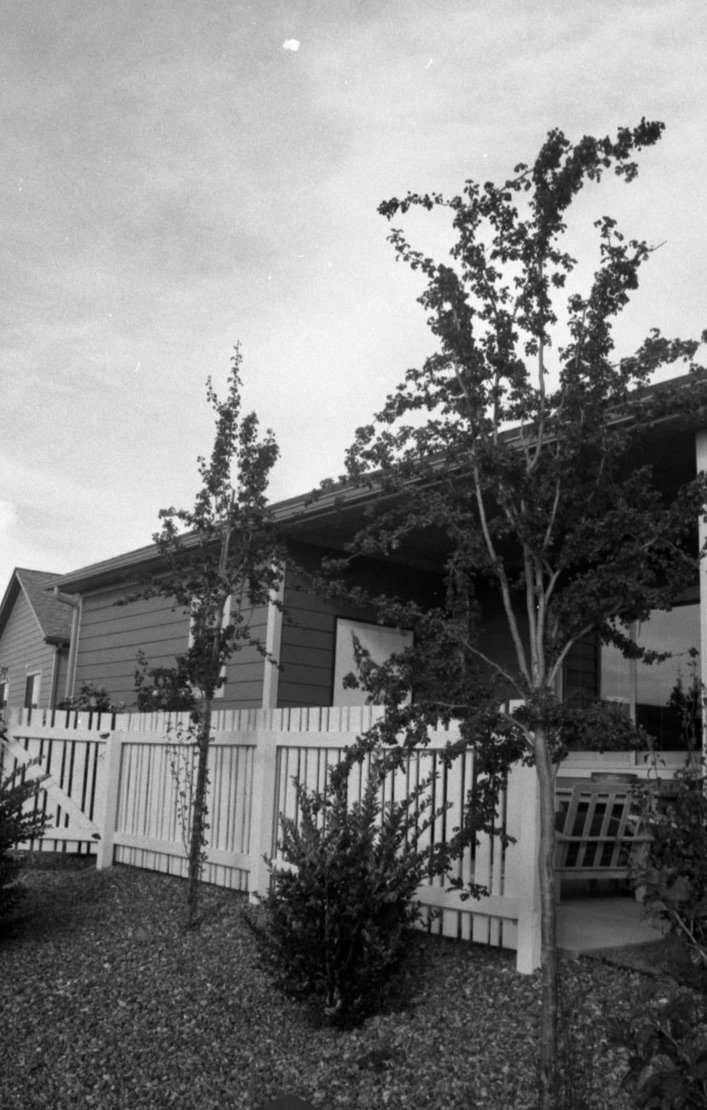
Black and white photo of a backyard with a white wooden fence, trees, bushes, and a house with a large window and a porch.
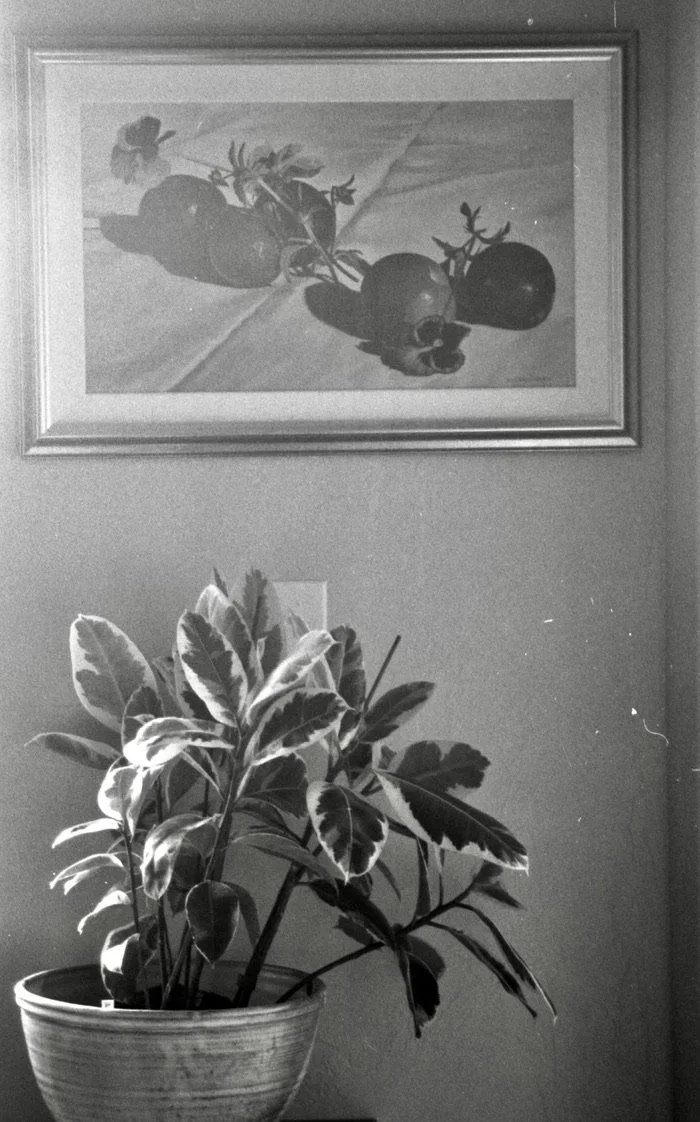
A potted plant with large variegated leaves in front of a wall, with a framed picture of tomatoes hanging above it.
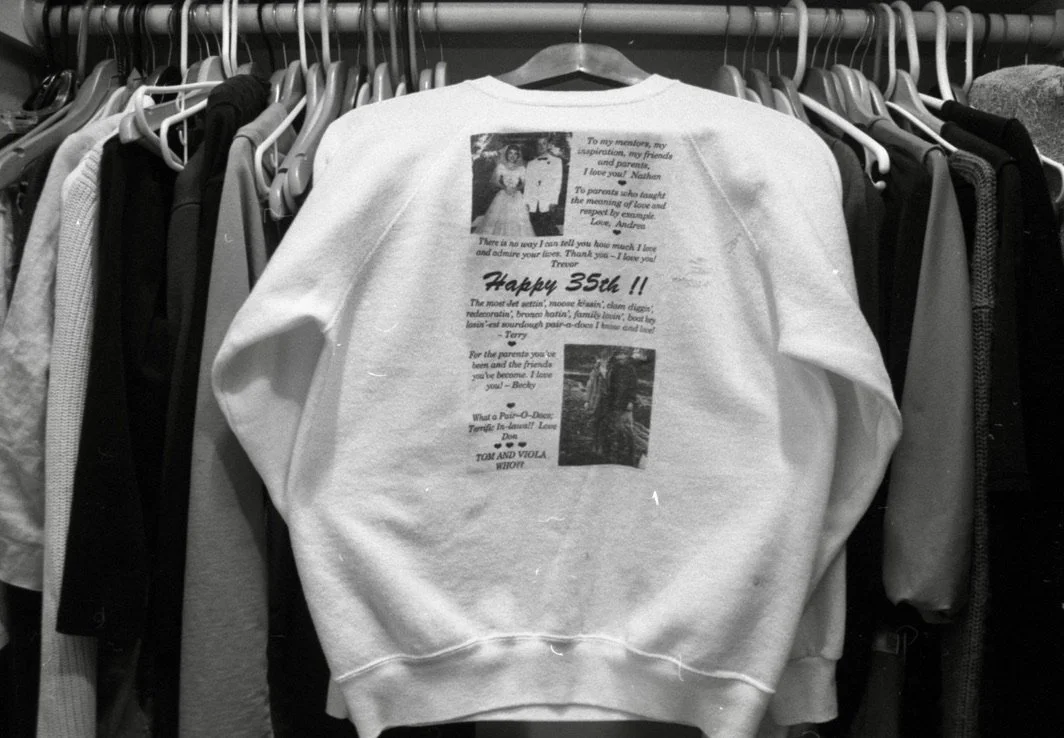
White sweatshirt hanging on a clothing rack with printed text and images on the back, surrounded by other garments.
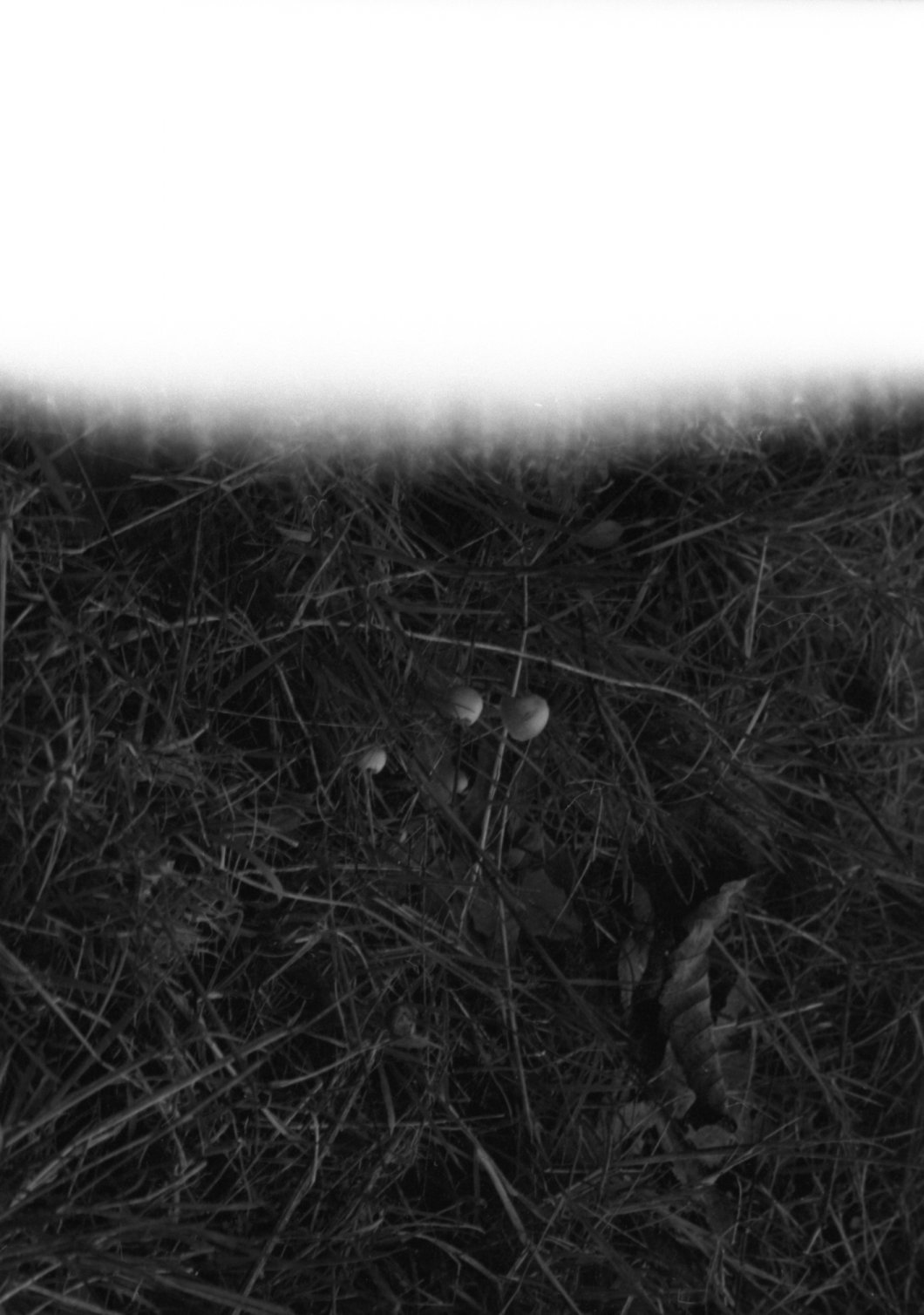
Black and white photo of a patch of grass with small mushrooms growing among the grass blades.
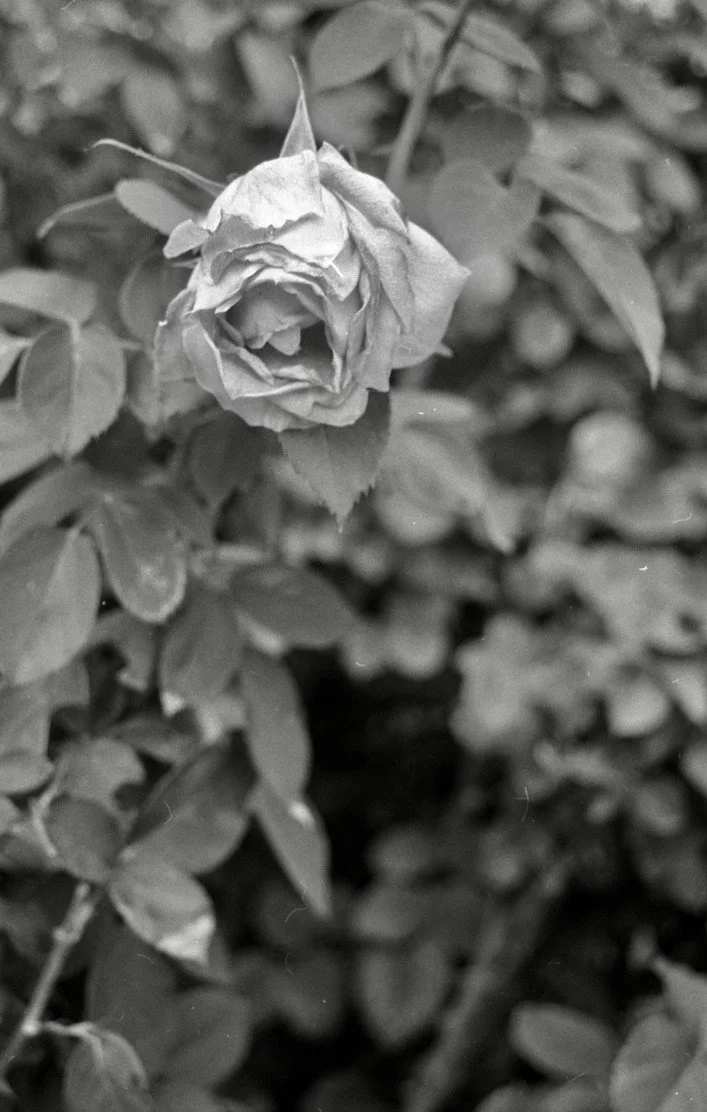
A black and white photo of a partially closed rosebud among dense foliage.